
Scientific classification and ecological significance of bamboo
Table of Contents
ToggleNatural classification of bamboo
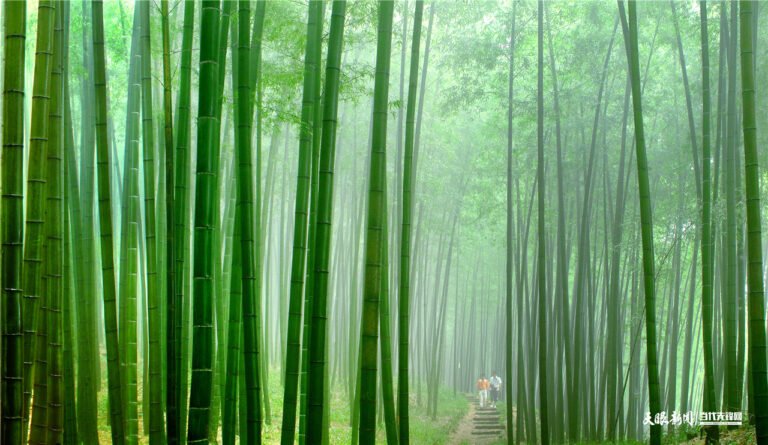
Bamboo, a plant paradigm that transcends time and space, depicts vivid and poetic pictures for people in the exquisite gardens of Jiangnan with its “sparse and slanting shadows”. In the vast mountain forests of the southwest, it even builds solid ecological barriers with its rolling bamboo seas. Its towering and straight branches and hard and dense texture often naturally lead people to classify it as a “tree”. However, farmers’ seasonal perception of “bamboo shoots after a rain” seems to suggest some kind of origin with herbaceous plants.
The appearance characteristics of bamboo
The appearance of bamboo is often mistaken for that of trees, but its tall and sturdy culms exhibit pseudo-woody characteristics, challenging people’s inherent perception of herbaceous plants. For instance, the common moso bamboo can grow to over 20 meters tall and have a breast height diameter of up to 10 centimeters. Its rigid and upright culms not only withstand strong winds but also resemble tree bark in both tactile and visual senses, making it difficult for people to associate it with soft herbaceous plants.
► The stem structure and growth characteristics of bamboo
The stem (culm) of bamboo lacks secondary xylem and appears rigid due to its thick cell wall, which gives it a growth pattern similar to that of herbaceous plants. Trees, as woody plants, have secondary xylem in their stems (trunks), which enables them to continuously thicken through the cambium during growth. As they age, they develop distinct annual rings, which contribute to the hardness and robustness of wood and trunk. However, the stem of bamboo stops thickening within just a few months after being unearthed and maintains a fixed diameter throughout its life. Its cross-section also lacks annual rings, revealing only a hollow pith cavity and radial vascular bundles. This stem structure closely resembles that of typical herbaceous plants such as wheat and corn.
► Taxonomic classification of bamboo
In taxonomy, bamboo clearly belongs to the Gramineae family. Its floral structure and leaf characteristics are consistent with those of rice, wheat, and further establish its identity as a herbaceous plant. From the perspective of plant taxonomy, bamboo is clearly classified under the Gramineae family, which is the same classification as well-known herbaceous food crops such as rice, wheat, and oats. The characteristics of Gramineae plants include stems that are mostly hollow and culm-like, leaves with parallel veins, and flowers that are spikelet-like. The floral structure, leaf morphology, and seed characteristics (bamboo rice) of bamboo all meet the classification criteria of the Gramineae family.
► Growth cycle and ecological function of bamboo
The unique ecological function of bamboo is attributed to its characteristic of “one-time flowering and fruiting”, as well as its rapid growth and strong tillering ability, which is significantly different from the continuous growth of trees. Most bamboo species undergo collective flowering after decades of growth, and the plants wither and die after bearing seeds. This life cycle characteristic is closer to some perennial herbaceous plants rather than the continuous growth pattern of trees. The clarification of this difference is of great significance for formulating more precise bamboo forest management strategies.
In summary, clarifying the herbaceous nature of bamboo not only represents a precise understanding of plant evolution patterns but also marks a significant step with practical guidance for ecological conservation and resource utilization. By integrating scientific utilization with protection, bamboo resources can be more rationally exploited.