Bamboo Charm: The Ecological Epic and Civilization Code of the Green robed Gentleman
In the Giant Panda National Park in Qionglai, Sichuan, a bamboo forest is growing at a rate of 0.0002 millimeters per second. This seemingly slow process is actually one of the most efficient carbon sequestration systems on Earth – with an annual carbon sequestration of 12.5 tons per hectare of bamboo forest, equivalent to the emissions of 2000 cars per year. Bamboo, an ancient plant that has existed for over 70 million years in the history of Earth’s evolution, is weaving a dual epic of life and civilization with its unique ecological wisdom and cultural symbolism.
1、 Ecological Guardian: The Natural Code of the Great Green Wall
The ecological miracle of rapid succession
Bamboo is the fastest growing plant on Earth. Under suitable conditions, Phyllostachys edulis can grow up to 1 meter tall per day and complete its life cycle from bamboo shoots to adult bamboo in 35 days. This astonishing growth rate is due to its unique underground stem system – bamboo whips rapidly expand through bud points on nodes, forming a massive clone population. On the degraded forest land in Mount Wuyi, Fujian Province, the artificially planted Dendrocalamus latiflorus restored 83% of its water and soil conservation capacity in only five years, and its root network density is 1.7 times that of natural forest.
Shelter for biodiversity
Within the Dendrocalamus sinicus forest in Ailao Mountain, Yunnan Province, 47 species of birds and over 1200 species of insects were recorded per hectare. The natural cavity formed by bamboo joints provides an ideal habitat for bats, while bamboo leaf debris nourishes soil microorganisms. In the Bashania fangiana community, the staple food of giant pandas, the moss coverage is 35% higher than other forest types, forming a unique micro ecosystem. Research has found that the species turnover rate of bamboo forest ecosystems is 2.3 times faster than that of evergreen broad-leaved forests, demonstrating strong ecological restoration capabilities.
Buffer zone of climate change
According to monitoring data from the Chinese Academy of Forestry, the bamboo forest system in the Yangtze River Basin can reduce surface runoff by 41% and soil erosion modulus by 67%. In extreme weather events, bamboo forests have shown amazing resilience – in 2023, Typhoon Mulan hit Guangdong, and the damaged bamboo forests recovered 85% of their biomass within 6 months. The fracture strength of bamboo fibers reached 2300MPa, which is twice that of ordinary steel. This mechanical property makes it a natural windproof and sand fixing barrier.
2、 Geographic distribution: Green veins from equator to temperate zone
Bamboo is widely distributed across tropical to temperate regions, forming a unique geographical pattern. There are over 1200 species of bamboo plants worldwide, of which China has over 500 species, accounting for 42% of the world’s total. In vertical distribution, Fargesia spp. in the the Himalayas can grow near the snow line at an altitude of 4000 meters, while Bambusa sinospinosa in Hainan Island builds a mangrove ecosystem at sea level.
Asian Bamboo Culture Circle
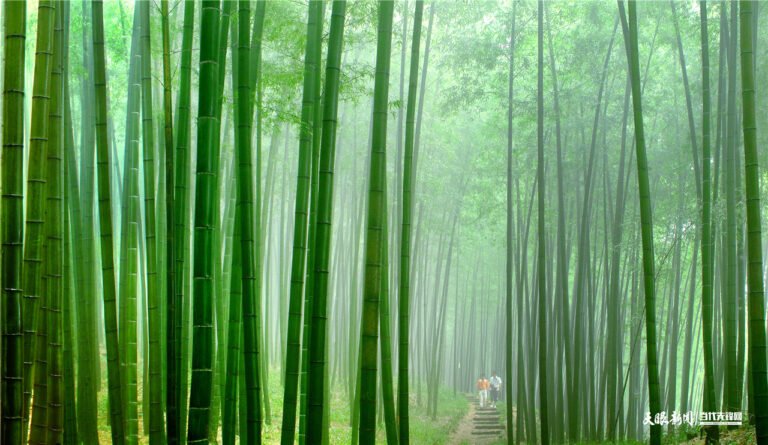
The area south of the Yangtze River in China is the world’s largest distribution area of bamboo forests. The Shunan Bamboo Sea in Yibin, Sichuan covers an area of 120 square kilometers and produces 2 million tons of bamboo annually. The Phyllostachys bambusoides forest in Japan complements the shrine architecture, and the bamboo forest trail in Arashiyama, Kyoto attracts 3 million tourists annually. The Southeast Asian giant bamboo (Dendrocalamus giganteus) reaches a height of 30 meters and supports the traditional bamboo architecture of Laos.
Green Pioneering in the New World
The bamboo plants in the Americas are mainly woody, with the Guadua angustifolia bamboo forest in Colombia covering an area of 1.2 million hectares, and its fibers are used to manufacture Boeing aircraft interiors. The giant bamboo (Bambusa vulgaris) in Brazil forms a unique “bamboo island” landscape on the Cerrado grassland, providing habitat for the endangered species of the maned wolf.
Africa’s Ecological Pioneer
The Ravenala madagascariensis, also known as the traveler’s banana in Madagascar, although not bamboo, exhibits similar ecological functions. This 25 meter high “desert water tower” can collect rainwater for animals to drink from its leaves, and the organic acids secreted by its roots can decompose granite to obtain nutrients.
3、 Cultural symbol: the spiritual totem of Eastern civilization
The concretization of a gentleman’s personality
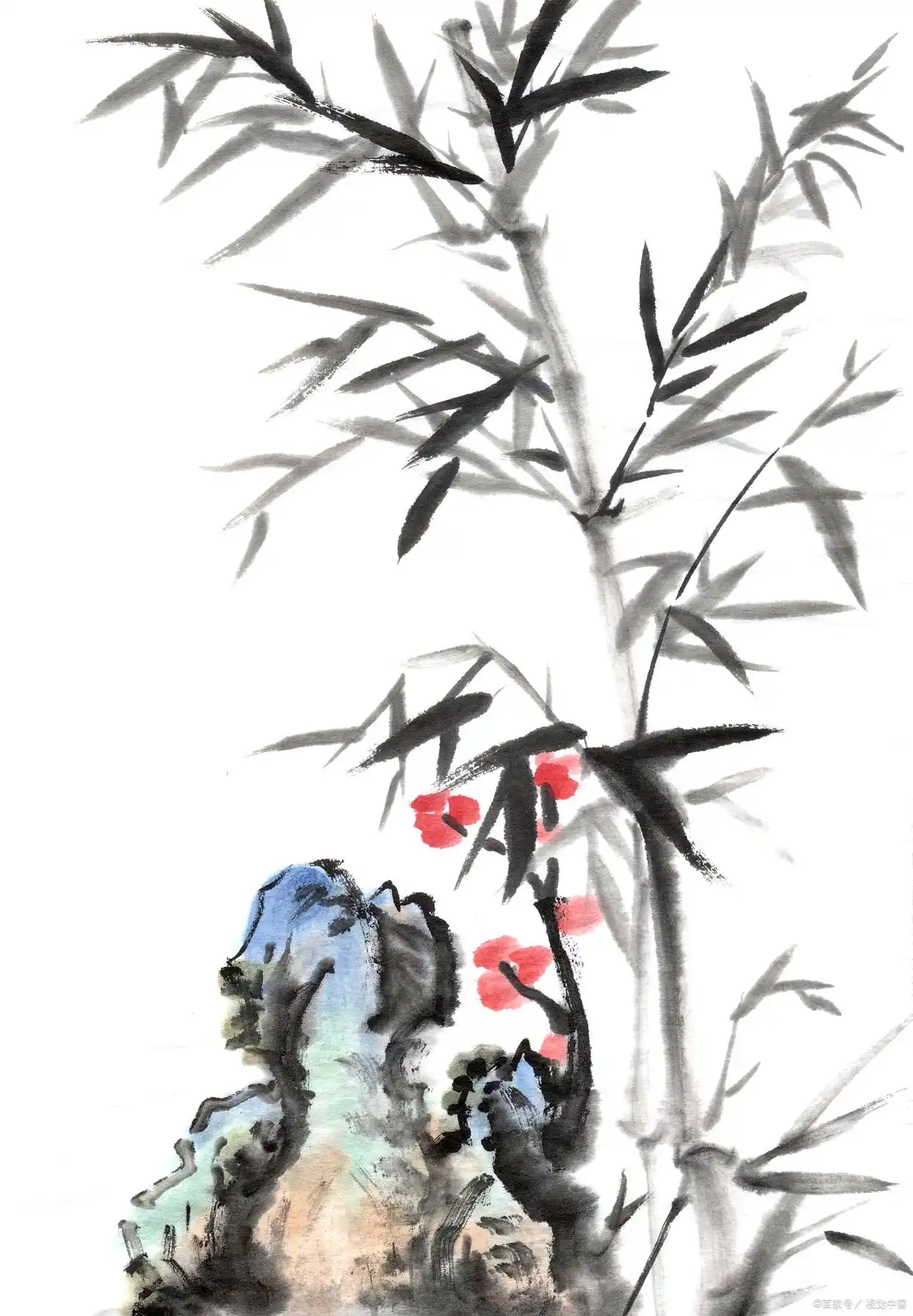
The millennium old lament of Su Shi, ‘I would rather eat without meat than live without bamboo,’ established the spiritual status of bamboo in Chinese culture. The ink bamboo depicted by Zheng Banqiao, with its resilience of “standing firmly in the broken rocks,” has become a symbol of the scholarly spirit. In Japan’s “Three Friends of Winter” culture, bamboo is listed alongside pine and plum, representing humility and nobility.
The eternal theme of literary imagery
Wang Wei’s artistic conception of “sitting alone in a secluded bamboo grove” elevates the bamboo forest into a symbol of spiritual retreat. The fishing rod in Li Bai’s poem “Always willing to sit on this stone, long hanging from the Yan Mausoleum to fish” symbolizes his reclusive feelings of not pursuing fame and fortune. In Vietnamese poetry, the sound of bamboo flute is often used to express homesickness, such as the poet Hu Chunxiang’s “The shadow of bamboo leaves shaking gold is trivial, and the fragrance of plum blossoms shines through jade and is exquisite”.
The integration of technology and art
The ancient Chinese paper-making technique originated from the application of bamboo fiber, and Cai Lun’s improved bamboo paper made it possible to spread knowledge. Modern technology has transformed bamboo fiber into biodegradable materials, and the medal ribbons for the 2025 Hangzhou Asian Games will be made from bamboo fiber. In the field of architecture, the “Bamboo Cube” exhibition hall in Singapore, built with bamboo by Spanish designer Santiago Calatrava, achieves a perfect dialogue between nature and technology.
4、 Future Inspiration: Bamboo Solutions for Green Economy
Carbon neutral green engine
The carbon sequestration capacity of bamboo forests makes them an important tool for climate regulation. The “Bamboo Forest Carbon Sequestration Trading” project in Anji, Zhejiang has achieved an annual trading volume of 120 million yuan, promoting the transformation of bamboo forest management mode from logging to carbon sequestration. According to data from the International Organization for Bamboo and Vine (INBAR), the annual carbon sequestration of bamboo forests worldwide reaches 1.5 billion tons, equivalent to 30% of the annual emissions of the European Union.
A model of circular economy
The “all bamboo utilization” model in Fujian converts bamboo processing residues into products such as activated carbon and bamboo vinegar, increasing the added value by five times. The “bamboo fiber textile biofuel” industry chain in Sichuan has achieved closed-loop management from planting to end products, with a resource utilization rate of 98%.
A New Carrier for Civilization Dialogue
In China’s “the Belt and Road” initiative, bamboo culture has become an important medium for people to people and cultural exchanges. In Africa, the “Bamboo Industry Demonstration Park” built with Chinese assistance has helped develop bamboo weaving handicrafts and created employment for 200000 people. In Europe, the Dutch “Bamboo Architecture Workshop” combines Eastern aesthetics with modern design, giving birth to the “New Hsinchu Constructivism” architectural school.
Conclusion: Bamboo charm has lasted for thousands of years and continues to thrive
From the bamboo sea of Bashan and Shushui to the green corridors along the Mediterranean coast, bamboo weaves the latitude and longitude of life on Earth with its emerald green veins. It is both an engineer of the ecosystem and a witness to the evolution of civilization. In today’s intertwined climate change and biodiversity crisis, the survival wisdom of bamboo provides valuable inspiration for humanity: true development should be like bamboo – rooted in the earth and pointing straight to the sky, flexible in its body and upright in its heart. When we listen to the rustling sound of the wind passing through the bamboo forest, it is both a natural whisper and a echo of civilization.