Eating, Clothing, Housing, Transportation, No Plant Can Be More Versatile Than Bamboo
The famous quote by the great literary figure Su Dongpo, ‘It is better to eat without meat than to live without bamboo.’ In fact, he also had a famous saying about bamboo: ‘Lingnan people should be ashamed of bamboo. Those who eat bamboo shoots, shelter bamboo tiles, carry bamboo rafts, earn bamboo wages, wear bamboo skin, write bamboo paper, and wear bamboo shoes. It can be said that this gentleman is indispensable in a day!’! ”Thanks to bamboo, from ancient times to the present, our clothing, food, housing, and transportation have all been supported by it.
Clothes made of bamboo leather, shoes made of bamboo,Wearing and using bamboo
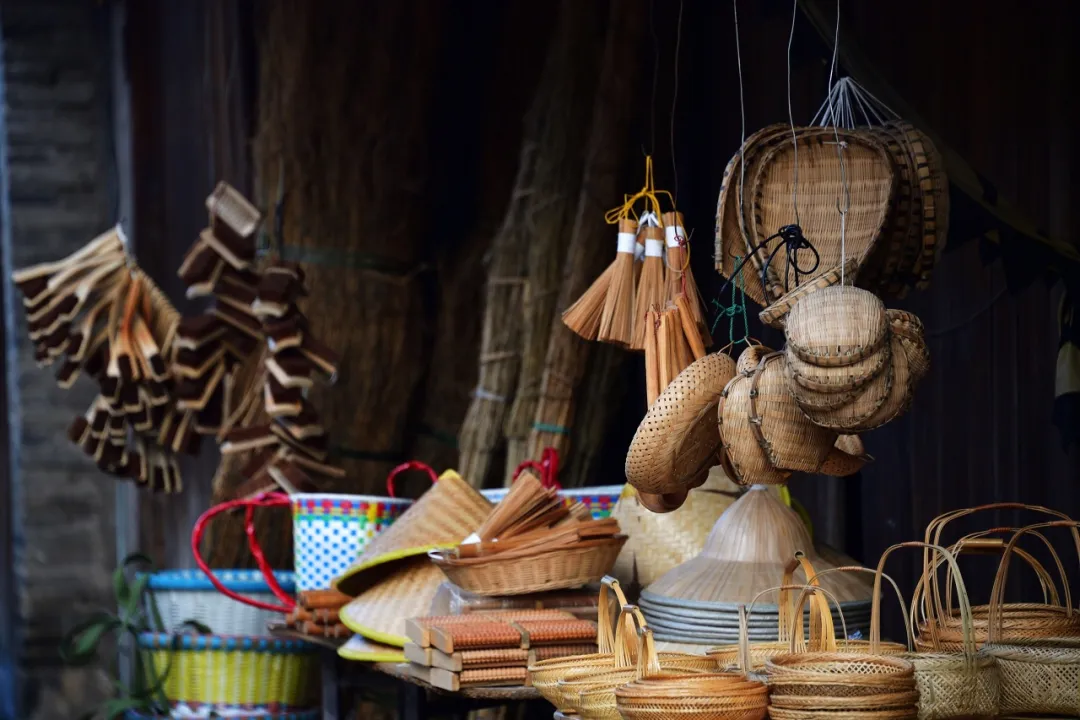
China is the country that used bamboo earliest and most widely in the world. As early as 10000 years ago, our ancestors began using bamboo to make hunting weapons such as bows, arrows, spears, etc. But bamboo not only has the “rigidity” that can be used as a weapon, but also has a “softness” side: the phloem tissue of bamboo poles, commonly known as “bamboo skin” or “bamboo green”, can be cut into thin bamboo strips and threads, and skillfully woven into various shapes and sizes of objects.
The slender tubes that transport nutrients within the body of higher plants are known as “vascular bundles” in botany. In bamboo stems, the more outward they are, the denser the vascular bundles become. The vascular bundle is mainly composed of cellulose, which has good connectivity and flexibility, and bamboo fiber is longer and more flexible than the fibers in tree stems. Therefore, the outermost two layers of bamboo skin (head green and second green) on bamboo poles have been one of the most suitable natural materials for weaving since ancient times.
Weaving is one of the most commonly used forms of bamboo utilization by people
To this day, we can still sense the presence of bamboo from the names of many household appliances: baskets, baskets, boxes, cages, bamboo hats, bamboo baskets, bamboo fences… Bamboo has low cost, strong plasticity in weaving, and is lightweight and sturdy, making it the king of cost-effectiveness.
The “clothes made of bamboo skin” and “shoes made of bamboo” depicted by Su Dongpo should also be clothing woven from bamboo silk. Nowadays, there is a better way to wear bamboo on the body: extracting bamboo fibers and weaving them into wrinkle resistant and smooth clothes.
It also has a special advantage – bamboo emits a special substance that can inhibit bacterial growth, so walking into the bamboo forest will feel fresh air, and the feces and corpses of animals in the forest are not easily decomposed. Through modern technology, people have been able to extract this antibacterial substance, enabling bamboo fiber fabrics to have their own antibacterial and deodorizing functions.
Su Dongpo’s “Clothes made of bamboo skin” may be rainproof clothing woven from bamboo strips. In the late Qing Dynasty, another type of “bamboo clothing” was popular, which involved stringing bamboo tubes with a diameter of only a few millimeters with silk thread and weaving them into finished garments. Wearing them in summer felt like a cool bamboo mat, providing a cooling effect.
Pizhe Bamboo Tile,The Counterattack of ‘Wood Replacement’
Traditional Chinese architecture is mainly based on brick and wood structures, while in southern bamboo producing areas, bamboo is an affordable substitute for wood. It is straight without branching, and the bamboo pole contains a large amount of silicon dioxide in its cells. Its texture is hard and resilient, making it a natural excellent material. More importantly, bamboo grows faster and is much easier to obtain than wood. A 20 meter long piece of wood may take 60 years for a tree to grow, while a single bamboo can grow to 20 meters in just 60 days and be ready for use, not exceeding 6 years.
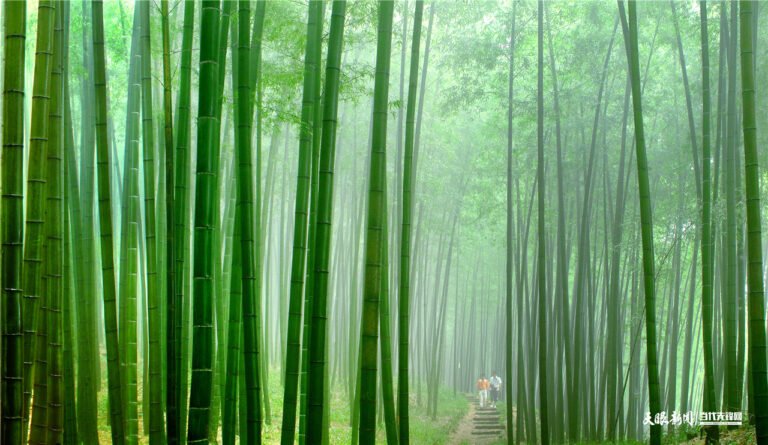
Bamboo (Phyllostachys edulis) is the most mainstream industrial bamboo in China, with the largest planting volume. As a large scattered bamboo, it can form a large single bamboo forest landscape, so famous “bamboo seas” such as Sichuan Shunan Bamboo Sea, Anhui Mukeng Bamboo Sea, etc. are mainly composed of bamboo forests.
From southern China to Southeast Asia, classic residential buildings known as “suspended bamboo towers” often use bamboo as the main pillar, with most of the building materials being made of wood, and some even entirely made of bamboo, providing a cool and ventilated environment. In recent years, with the expansion of overseas exchanges, Chinese people have also spread the construction technology of this bamboo building to Africa and Central and South America, using local native bamboo to help local people build houses.
Bamboo is used as a building material, in addition to the obvious bamboo tower, there is also an even older form: weaving bamboo with mud walls. It is also called “woven wall” and is an ancient architectural form in the bamboo producing areas of Asia, which appeared as late as the Han Dynasty. Bamboo poles or wood are used as pillars, and bamboo strips are inserted between the gaps of the pillars to form a wall. Finally, a protective layer such as grass mud and lime is applied to the surface. This type of wall is lightweight and breathable, making it very suitable for hot southern regions.
Until today, bamboo remains a treasure in the construction industry. On the one hand, bamboo architecture has a unique structure and mathematical beauty that fascinates many designers. On the other hand, even for high-rise buildings made of reinforced concrete, bamboo remains an excellent material for scaffolding during construction; Bamboo processed boards, furniture, and other materials are popular in indoor decoration.
Even today, architecture cannot do without bamboo materials. In China, the vast majority of industrial bamboo materials come from bamboo (Phyllostachys edulis). In 2020, the area of bamboo forests in China reached 6.73 million hectares, of which 70% were bamboo forests. A bamboo pole needs to grow for more than 5 years to reach the strength required for building materials. Bamboo poles of different ages have significant differences in moisture content and material shrinkage rates, and cannot be mixed for processing. So farmers who cultivate bamboo often record the age of the bamboo by painting lines on the poles, adding one line a year, so that when harvesting, they can clearly group the “same age” bamboo poles together.
Bamboo has its own cavity, and its buoyancy is greater than that of solid wood. Its outer layer of bamboo skin is also very dense and waterproof, making it more suitable for use as a water carrier than wood. Traditional Chinese bamboo rafts only require a few long bamboo poles arranged side by side to support the weight of several people.

In the Chishui River Basin of Guizhou Province, there is a folk art called “solo bamboo drifting”, where skilled individuals use a thick bamboo pole as a raft and a thin bamboo pole as an oar to float on the water, as if walking on flat ground, and even perform various dance and acrobatic movements on the bamboo pole.
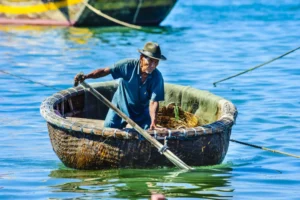
In Southeast Asia, such as Vietnam, the idea of using bamboo as a boat is completely different: instead of using bamboo poles, bamboo strips are woven into a large “bamboo basket” to carry people inside. This’ basket boat ‘is a traditional Vietnamese fishing vessel that can be used in rivers and even shallow waters. Of course, as the saying goes, ‘drawing water with a bamboo basket is useless.’ This boat will leak if it is directly launched, so it needs to be coated with tung oil or tree resin as a waterproof layer.
Bookkeeper bamboo paper, The initial carrier of literature and art
The Chinese characters we use today have had an inseparable bond with bamboo since their inception. The brush (pen holder) and bamboo slips made of bamboo are one of the earliest writing tools and the starting point of the inheritance of Chinese civilization. The words and phrases that are still in use today, such as “article,” “book,” “compilation,” and “finishing,” all come from bamboo slips.
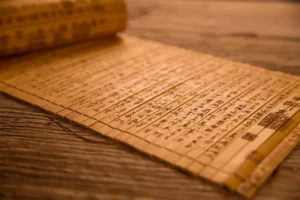
Can be used as a writing tool
Over 1700 years ago during the Jin Dynasty, people began using bamboo pulp to make paper. In the era of Su Dongpo, the production of bamboo paper was already quite mature. At that time, mulberry paper, hemp paper, and so on were also made from plant fibers, but bamboo paper was popular among ordinary scholars due to its large quantity and low price. After the Southern Song Dynasty, places with abundant bamboo forests in Fujian, Zhejiang, and Sichuan became star producing areas for bamboo paper. Until today, smooth, thin, and highly absorbent bamboo paper remains a great helper for many people practicing calligraphy and painting.
In the field of music, bamboo has also been actively involved for thousands of years. Legend has it that the musician Lun of Huangdi used bamboo tubes to make musical instruments and played the sound of a phoenix. The bamboo pipes of different lengths produce different tones, and Ling Lun formulated the “Twelve Rhythms” from them, which became the benchmark of Chinese music. Until the Qing Dynasty, people used bamboo to make the “Twelve Rhythms” to tune musical instruments.
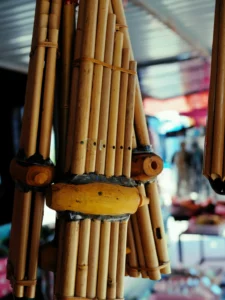
Musical instruments made of bamboo
Chinese traditional musical instruments are collectively referred to as “silk and bamboo”, which fully demonstrates the importance of bamboo in them. The sheng, xiao, yu, flute, and gui that are played, as well as the zheng, zhu, and gui that are played, all indicate their original materials with the bamboo prefix in their names. Among the common bamboo species in China, purple bamboo and spotted bamboo are the most classic bamboo used for musical instruments, known for their clear and melodious sound. In the southwestern region, many ethnic groups also use thick bamboo to make particularly large bamboo musical instruments such as awns and lusheng.
In other bamboo producing areas around the world, people have also discovered the musical properties of bamboo. The indigenous people of Central and South America also use bamboo pipes to make musical instruments similar to the flute.
Bamboo salary for those in charge, From cooking with firewood to eating, guys
Su Dongpo’s “cu à n” refers to using bamboo as firewood and cooking over fire. Bamboo is highly flammable and burns like straw or wheat straw, with strong firepower. Nowadays, cooking is generally done without burning firewood, which creates a sense of distance in this example. In fact, compared to cooking, eating is more inseparable from bamboo – the most Chinese characteristic tableware: the ancient “chopsticks” and today’s “chopsticks” both start with the word “bamboo”. Bamboo, which is both straight and lightweight, has been an excellent material for making chopsticks since ancient times.
With the increasing emphasis on food hygiene, restaurants widely use “disposable tableware” such as bamboo knives, forks, spoons, bamboo chopsticks, etc. Bamboo is abundant, fast-growing, and biodegradable, making it the most environmentally friendly material for disposable chopsticks. In the bamboo production area, it is common to see bundles of “giant spaghetti” standing in the open space at the village head: bamboo is chopped into thin strips, integrated into bundles, and erected on the ground. This is the rough raw material of disposable chopsticks, which will be sent to the factory for further processing after being air dried.