
Bamboo Solves Global Plastic Crisis, Bamboo Crafts Become Popular in Europe and America
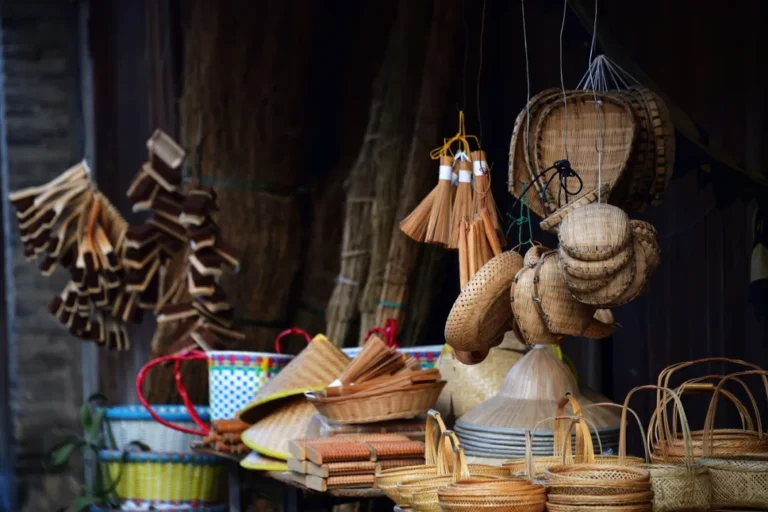
Bamboo products, carrying the daily memories of Chinese people for thousands of years, have quietly climbed onto the high ground of European and American fashion trends. In a high-end home furnishing store in Los Angeles, a bamboo dustpan has become a sought after artwork among emerging consumers due to its advantages of “pure craftsmanship,” “zero pollution,” and “Eastern environmental aesthetics. Chinese bamboo craftsmanship is gradually appearing in more corners of the world, from small towns in Southeast Asia to coffee shops in Europe.
The fundamental reason for promoting this trend is the global environmental crisis and plastic restrictions. Plastic is difficult to degrade and has gradually become a discarded object, while wood is not only expensive but also involves deforestation, and glass, although environmentally friendly, is bulky and fragile. In contrast, bamboo has emerged as it grows rapidly, is easy to degrade, has diverse shapes, is easy to carry, and all indicators meet environmental protection needs. Take bamboo straw as an example. Previously, Starbucks and other brands generally used paper straw, which was often roast due to poor durability and odor. After the application of bamboo products, not only is durability greatly enhanced, but customer praise also follows.
Behind this, a group of powerful bamboo enterprises have become promoters. Some companies have an annual output of up to 2 billion bamboo straws alone, and their products are exported to over 100 countries. Although Southeast Asian countries have also begun to imitate production, China has always maintained its advantage with mature technology and design. In fact, whether it is a straw or a dustpan, it reflects a complete industrial chain upgrade behind it. Bamboo, originating from rural areas, is now becoming a new favorite on the global industrial stage.
At the technical level, bamboo tableware that used to crack and chip due to insufficient heat resistance has achieved a breakthrough through research and development by a research team. After the introduction of the “high heat pressure glue free condensation” technology, bamboo fiber tableware on the market can not only withstand high temperatures of 120 ℃ without formaldehyde residue, but also successfully pass EU food grade testing.
The new uses of bamboo have also extended to the industrial sector. For example, bamboo wrapped composite pipes have been applied in the T4 new terminal of Madrid Airport in Spain. The laying of thousands of meters of bamboo pipes demonstrates the dual advantages of material strength and environmental protection. For higher end market applications, new material companies have begun to develop portable conductive bamboo carbon based battery cases; And introduce bamboo based prefabricated panels with a compressive strength of 120MPa to replace some steel structures, and produce 220000 tons of bamboo pulp annually in the industrial park to create packaging materials and environmentally friendly plastic films.
It is worth noting that the internationalization of bamboo products also relies on the improvement of quality standards. The nine ISO bamboo products international standards developed with China’s participation have become a major part of industry regulations, making product exports smoother. It is expected that by 2026, the global bamboo products market will grow to $82 billion, with China expected to occupy nearly half of the market share. Currently, the gross profit margins of bamboo building materials and bamboo fiber products are higher than those of traditional manufacturing industries.
However, the problem still exists. Bamboo harvesting relies on manual labor, with a cost of 450 yuan per ton, and the market purchase price is still low, resulting in limited income for farmers. The transportation difficulty in mountainous areas is high, and the phenomenon of idle forest land is prominent. Some companies have attempted to reduce costs through mechanization, such as investing heavily in the development of efficient harvesting machinery in places like Anji. As a result, labor costs have significantly decreased, harvesting efficiency has improved, and bamboo resources have been better utilized.

Although the high-end market has high recognition, ordinary consumers still feel that the prices are too expensive. High investment in machinery, weak catch-up among small and medium-sized enterprises, and the need for further promotion of standards. With the continuous increase of environmental pressure and the continuous improvement of various links in the industrial chain, bamboo products are gradually shifting from an “alternative option” to a standard choice in the market.
Looking to the future, the transformation of the bamboo products industry has already begun to emerge. As long as the cost of machinery can be further reduced, the supply chain can be more perfect, and standardization continues to advance, bamboo is not only expected to surpass in the environmental protection track, but may also lead a structural change in the global materials industry.