The Ecological Success Path of Bamboo: From Cultural Symbols to Future Research
The Spirit and Characteristics of Bamboo
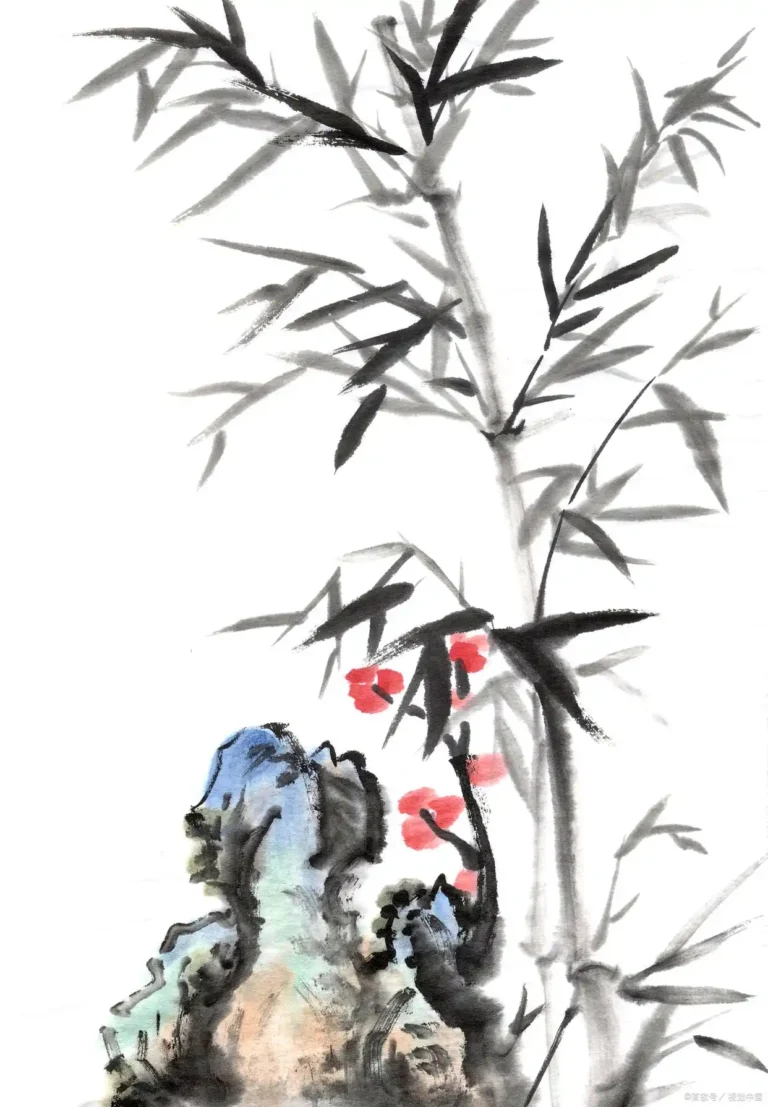
Bamboo, a plant that grows deep in the spirit and life of the Chinese people, has been revered by intellectuals since ancient times for its humble and restrained qualities. Bamboo has always carried rich emotional symbols, from “biting the green mountains without relaxing, standing firmly in the broken rocks” to “preferring to eat without meat, not living without bamboo”. Nowadays, it has deeply integrated into our lives in the form of bamboo chairs, stools, baskets, and other products, as well as food such as bamboo shoots.
However, for ecologists, bamboo is a plant full of contradictions. They may be grass, but they can grow taller than trees; They are not tolerant to shade and cannot grow tall all the time. They only bloom once every few decades, but they can occupy a large amount of territory in tree dominated habitats. So, how did bamboo achieve such diversity and success?
The secret to success of bamboo
Evolution and Environmental Adaptation
Recently, a research team from Princeton University published a study in the international journal Ecological Monographs, which has revealed the mystery to us. This study reveals how the life history traits of bamboo provide it with ecological advantages in competition with trees by constructing a theoretical model. From an ecological perspective, this study provides a new explanation for the success of bamboo.
So, how did bamboo stand out in this competition? This starts with its evolutionary history. Once upon a time, the ancestors of bamboo were the broad-leaved grasses that crawled in the shade of tropical rainforests, enduring shade. However, as these herbaceous forms of bamboo spread into the more well lit forest gaps and boundaries, they gradually evolved stronger bamboo poles and more complex branches. The abundant light combined with the hollow stem advantage greatly accelerates the growth rate of bamboo and enables them to stand higher. In the end, bamboo “went against the differentiation of ancestors” and formed herbaceous bamboo and highly woody “bamboo trees”.
Reproductive strategies of bamboo
Although bamboo evolved from grass to tree, they do not have the ability for secondary xylem and secondary growth. Therefore, they are unable to thicken their trunks, continuously grow upwards, and spread branches and leaves like trees. However, this has not prevented the success of bamboo in the ecosystem. They have gained unique ecological advantages in competition with trees due to their unique life history traits, such as rapid growth and tall stature. This advantage enables bamboo to steadily occupy a large amount of territory in tree dominated habitats, thereby achieving its diversity and success in ecosystems.
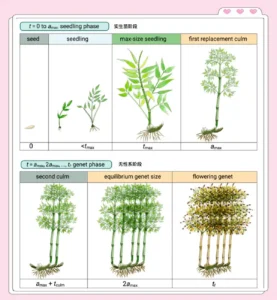
Bamboo is a typical asexual reproductive plant, which is essentially a clonal system composed of numerous physiologically independent but genetically identical offspring connected by underground stems. These connected bamboo not only integrate and exchange resources, but also store excess water and nutrients in underground stems. Bamboo maintains its herbaceous properties through vegetative reproduction, forming strong clones, while occasionally engaging in sexual reproduction to update the population.
The Geographic Distribution and Ecological Impact of Bamboo
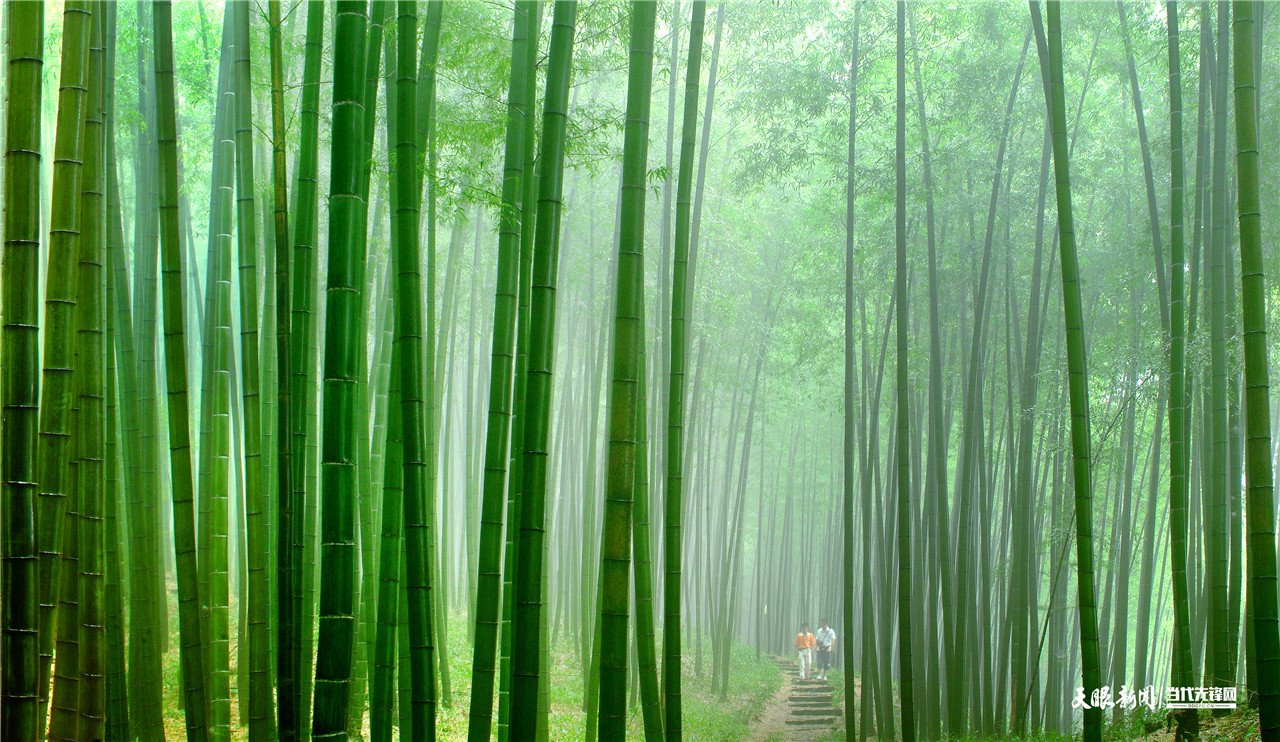
Surprisingly, bamboo did not choose to attack drier and more open grasslands, but instead decided to stay in the forest, attempting to evolve more and more like trees and ultimately compete with them in the upper part of the forest. In tropical regions, forests mixed with bamboo and trees are very common. Even more astonishing is that in subtropical and temperate regions, bamboo can completely displace trees and occupy the upper part of the forest alone, forming a spectacular bamboo sea.
The life history characteristics of bamboo also exhibit significant regional characteristics. In tropical regions, woody bamboo is usually tall and clustered, without wandering bamboo whips, and its flowering cycle generally does not exceed 30-40 years. In contrast, woody bamboo in subtropical and temperate regions are mostly mixed or scattered bamboo, with a height of about 10 meters. They have a stronger ability to occupy space through asexual reproduction, often forming dominant forests of a single species – bamboo seas, and their flowering cycle is longer than that of tropical woody bamboo. What is the mechanism behind this?
Future research directions of bamboo
Current research status and shortcomings
In order to gain a deeper understanding of the life history characteristics and flowering cycle of bamboo, we need to examine it in a broader ecosystem. This includes studying the interactions between bamboo and its surrounding environment, other organisms, and different species. Through this approach, we may be able to more comprehensively uncover the mysteries of bamboo flowering cycle and provide deeper insights into its role and position in the ecosystem.
Future research opportunities and applications
Currently, our research on bamboo focuses on its long growth stages and asexual reproduction, while our understanding of its sexual reproduction and ecological mechanisms of succession is limited. We will need a more comprehensive hypothesis to explain these different features and their inherent connections. Therefore, future research opportunities will focus on the life history characteristics of bamboo, combining theoretical and empirical research to explore its ecological impact in depth. This has important theoretical basis and practical guidance significance for the protection and management of bamboo forest resources.